FIRST WINTER ASCENT
THREE NORTH PILLARS PIZ PALÜ
THREE NORTH PILLARS PIZ PALÜ
Philipp Brugger and Lukas Waldner
On March 8, alpinists Philipp Brugger and Lukas Waldner completed a remarkable new achievement in the Swiss Alps: the first winter ascent of the three North Pillars of Piz Palü (East, Bumiller and Spinas) in a single day. The pair linked the routes in 8 hours and 59 minutes, measuring from the first moves on the East Pillar to the exit of the Spinas Pillar.
Although all three lines are established alpine classics in summer — the East Pillar and Bumiller Pillar in particular — the situation changes dramatically in winter. Lower temperatures, snow‑covered holds, trickier ice and mixed terrain, and the need to climb the entire route with crampons turn each pillar into a serious undertaking. It was a day that demanded two things above all: being confident and staying dialed in.
“For me, Piz Palü is one of the most beautiful mountains in the Alps,” says Brugger. “The pillars line up perfectly. It was a purely aesthetic project — and it had never been completed in winter.”
FAVOURABLE CONDITIONS – FOR WINTER

Brugger and Waldner found conditions that were “good” by winter standards: the wind had cleared parts of the walls, leaving less snow on holds, and allowing more efficient climbing. Snow on the approaches and descents was manageable, though they still had to keep an eye on glacier crevasses. You don’t get to save energy for later when each stop cools the system down—fingers, feet, attention span. Winter demands continuous effort: clearing snow from grips, climbing mixed terrain entirely in crampons, and maintaining a steady pace in sub-zero temperatures.
“There was no mental struggle,” explains Waldner. “We were excited about the project and everything just flowed. It was a perfect day.”
A CONFIDENT TEAM AND A PRECISE PLAN

One of the keys to success was the pair’s mountain efficiency. Both are accustomed to long, demanding climbs at speed — such as ascending the Eiger North Face in around four hours, or climbing the Bonatti Route on the Matterhorn in winter in a single day. This experience gave them the confidence and clarity to plan the Piz Palü trilogy in detail and follow that plan without deviation.
“We knew exactly what we were doing,” says Brugger. “As a rope team we work extremely well together. Each of us knows our role and things (almost) always run smoothly.”
THE BUMILLER PILLAR – THE PSYCHOLOGICAL KEY

Among the three pillars, the Bumiller is often the psychological key—partly because it’s widely regarded as the most difficult line, and partly because its character can force a decision: keep moving or concede the day. Route descriptions emphasize steep ice and long combined climbing in the middle pillar, with difficult terrain appearing early—exactly the kind of architecture that tests a plan.
But Brugger and Waldner had already climbed the Bumiller back in December. That wasn’t just a tick. It was research: how the wall feels in winter, what changes, what stays consistent, where time is won or lost.
LIGHTWEIGHT STRATEGY AND THE IMPORTANCE OF GEAR

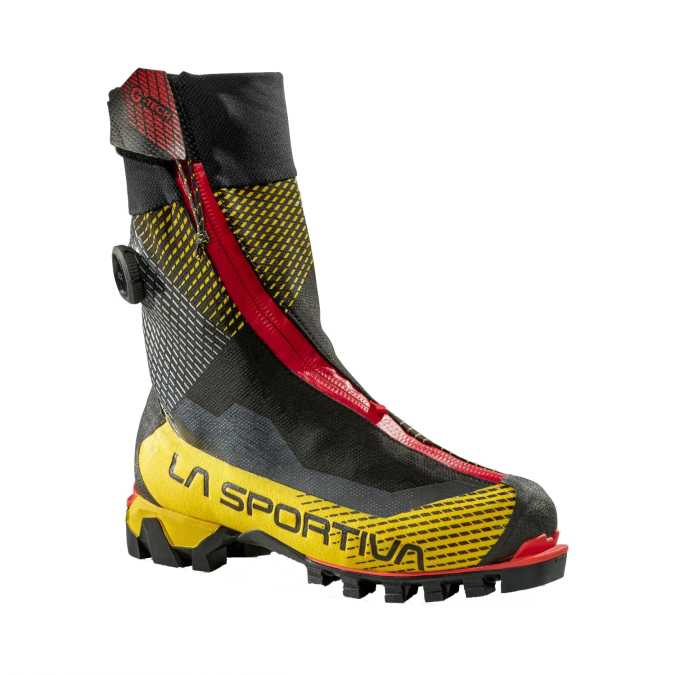
The pair chose to climb as light as possible, a crucial tactic given the short daylight window of winter. Their setup included the La Sportiva G‑Tech, an ultralight technical boot equipped with the BOA® Fit System, offering precision and responsiveness on mixed terrain but, by design, less insulation than heavier winter models — a tradeoff they had to manage carefully.
They also carried the Millet Trilogy Sky 25, a minimalist, fast‑and‑light alpine pack that integrates BOA® for rapid compression and load stabilization. With a quick turn of the dial, the pack cinches tight, keeping weight close to the body and movement efficient during climbing transitions.
In this context, the BOA® Fit System played a meaningful role on both pieces of equipment.
“Trusting your equipment completely is essential,” says Brugger. “Our boots are very light, so they’re not the warmest. Being able to micro‑adjust the fit with the BOA® Fit System at the belay to get the blood flowing again and warm the feet — that was a real relief. And tightening it again in seconds before climbing, and being able to feel confident on the most technical sections, made a big difference in performance.”
Brugger and Waldner are careful not to claim more than the record supports: A notable chapter for Piz Palü with a “winter first”.
A DAY IN WINTER TO REMEMBER

The ascent unfolded with a rare balance of concentration and enjoyment. With no setbacks, no doubts, and no rush, the experience stands out in the minds of both climbers as one of those pure Alpine days that seem to flow on their own.
“The joking between us along the way,” Waldner laughs. “And of course, topping out each of the three pillars. Every summit felt like its own small milestone.”
With this ascent, Brugger and Waldner add a notable chapter to recent winter alpinism in the Alps: a logical, elegant trilogy — and now, a winter first.
La Sportiva G-TECH